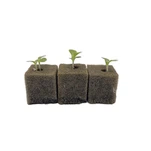
Use Plant Growing Substrate in Establishing Roof Garden
Plant growing substrate is made from pphenolic foam that has excellent insulating properties and is therefore commonly used in buildings for thermal insulation. However, recent studies have shown that phenolic foam can also be used as a plant growing substrate for creating roof gardens. Roof gardens are an excellent way to make use of otherwise unused space and help to mitigate the urban heat island effect by providing shade and reducing the amount of heat absorbed by buildings. Using phenolic foam as a growing substrate for roof gardens has several advantages over traditional soil-based substrates, including reduced weight, increased water retention, and improved plant growth.

The first step in using phenolic foam plant growing substrate is to select a suitable foam type. Phenolic foams come in several different densities, each with different properties that make them better suited for different applications. For a roof garden, a low-density phenolic foam should be used, as it is lighter weight and has better water-holding capacity. Additionally, it is important to choose a phenolic foam that is free of any hazardous chemicals or substances that could leach into plant roots and harm the plants.
Once a suitable phenolic foam has been chosen, the next step is to prepare it for use as a plant growing substrate. The foam should be soaked in water to allow it to absorb as much moisture as possible. This is important, as the foam will need to hold onto as much water as possible to support plant growth.
After the plant growing substrate has been soaked and is fully saturated, it can be placed into planters or onto a roof surface for use as a growing substrate. The foam should be tightly packed into the planter or onto the roof surface to prevent it from shifting or moving around in the wind. Once the foam has been placed, the plants can be added directly into the foam. The foam acts as both a support structure and a growing medium for the plants, providing them with necessary nutrients and water.

It is important to ensure that the foam is well-drained. If water is allowed to accumulate in the foam, it can lead to root rot and other plant diseases. Therefore, it is important to install a drainage system beneath the foam to allow excess water to drain away. Additionally, regular watering and fertilization should be carried out to keep the plants healthy and thriving.
The use of phenolic foam as a plant growing substrate for establishing a roof garden has several advantages over traditional soil-based substrates. Phenolic foam is lightweight, has better water retention, and allows for improved plant growth. When used properly, phenolic foam can be an excellent choice for creating a thriving and beautiful roof garden.