Thermal Insulation Wall Board
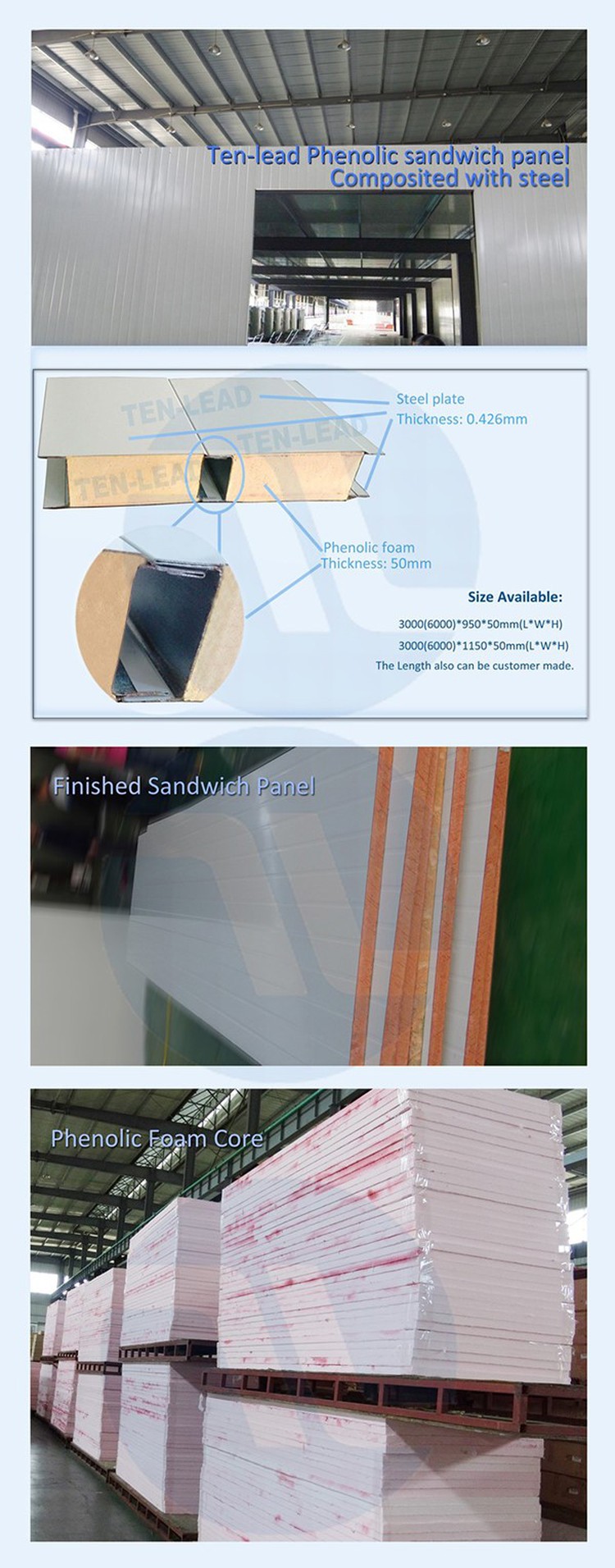
Tenlead thermal insulation wall board is specialized construction components engineered to provide enhanced thermal insulation. Comprising multiple layers, these boards typically feature a core material, such as expanded polystyrene (EPS), Polyurethane (PU), or Phenolic Foam, enclosed between rigid facings like metal sheets, aluminum foil, or fiberglass. These boards offer superior insulation properties, effectively minimizing heat transfer and maintaining consistent indoor temperatures. Widely used in walls, roofs, and facades of buildings, they contribute to energy efficiency and environmental sustainability. Thermal insulation wall board comes in various sizes, densities, and configurations, offering versatility in applications across residential, commercial, industrial, and cold storage sectors.
|
Item |
Unit |
Specification |
|
Density |
kg/m3 |
35-120 |
|
Thermal Conductivity |
w/m.k |
0.022 |
|
Combustibility Property |
Class 0 (BS 476 Part 6 & 7) |
|
|
Water Absorption |
% |
1.9 |
|
Max Smoke Density |
% |
2 |
|
Dimension Change |
% |
0.3 |
|
Working Temperature |
℃ |
-250 to +150 |

Advantages
1. Durable and Long-lasting: They boast longevity, requiring minimal maintenance while preserving their insulation properties over time.
2. Environmental Friendly: With eco-friendly materials, these panels contribute to sustainable building practices.
3. Customization: Available in various sizes and designs, they cater to diverse architectural and construction requirements.
4. Easy Installation: These panels often offer straightforward installation methods, reducing labor time and costs.
How to Use It
1. Preparation: Ensure the surface is clean, dry, and free from dust or debris.
2. Measurement: Accurately measure and mark the installation area for board placement.
3. Cutting: Cut boards precisely to fit the designated area using appropriate tools.
4. Adhesive Application: Apply adhesive to the back of the board or the surface following manufacturer instructions.
5. Placement: Press the board firmly onto the surface, aligning it accurately.
6. Sealing Joints: Seal board joints with tape or sealant to prevent air leakage.
7. Securing: Use mechanical fasteners if necessary for added stability.
8. Finishing: Inspect and ensure uniformity in board placement for optimal insulation.
Applications
1. Data Centers and Server Rooms: Used to maintain stable temperatures in data centers, ensuring optimal conditions for equipment performance and longevity.
2. Automotive and Aerospace: Integrated into vehicles, aircraft, and spacecraft for thermal insulation, ensuring temperature control and comfort.
3. Renewable Energy Projects: Installed in structures related to solar or wind energy to insulate and protect equipment involved in energy generation.
4. Soundproofing Applications: Utilized in sound studios, theaters, or auditoriums to dampen noise and enhance acoustics.
5. Agricultural Settings: Employed in greenhouses or farming structures to regulate temperatures for crop growth or livestock comfort.
6. Marine and Offshore Applications: Used in marine vessels or offshore platforms to provide thermal insulation and protect against temperature fluctuations.
Hot Tags: thermal insulation wall board, manufacturers, suppliers, factory, for sale