Challenges of Vertical Farming
Vertical farming is a rapidly emerging agricultural technology that enables farmers to grow crops in a vertical, multi-tiered system, using artificial lighting, controlled environment, and soil-less cultivation. The concept of vertical farming has gained widespread attention in recent years due to its potential to revolutionize the way we produce and consume food. However, like any innovative technology, there are several challenges that must be addressed before vertical farming can become a viable solution for sustainable food production. Then we will discuss some of the major challenges of vertical farming.

1. High Capital Cost
One of the primary challenges of vertical farming is the high capital cost required to set up and operate the system. Vertical farming requires significant investment in infrastructure, technology, and skilled labor. The cost of building and equipping a facility for vertical farming ranges from hundreds of thousands to millions of dollars, depending on the size and scope of the project. This high entry cost may limit the adoption of this technology, particularly in low-resource settings.
2. Energy Consumption
Vertical farming relies heavily on artificial lighting to simulate natural sunlight and promote plant growth. The use of high-intensity LED lights and other technologies to create an optimized growing environment leads to increased energy consumption. This not only raises the cost of production but also has a significant environmental impact. The challenge is to find ways to reduce energy consumption while maintaining optimal growing conditions.
3. Water Management
Vertical farming requires a consistent and reliable water supply to keep crops healthy and productive. Water is a precious resource, and there is an increasing need for sustainable water management practices in agriculture. In vertical farming, water is circulated through the system to ensure optimal moisture levels for plants. This means that water management is critical for vertical farming to become sustainable and scalable.
4. Robust Supply Chain
Another challenge of vertical farming is the need for a robust supply chain. With vertical farming, crops can be grown and harvested year-round without the constraints of seasonal variation. But the ability to deliver fresh produce to consumers requires a well-designed and efficient supply chain system. The challenge is to design a supply chain that can efficiently transport crops from the farm to the consumer without losing quality or freshness.

5. Crop Selection
Vertical farming is particularly well suited for certain types of crops, such as leafy greens, microgreens, and herbs. However, not all crops can be successfully grown in a vertical farming system. Farmers must carefully select the right crops that are best suited for their facility and growing conditions. This requires extensive knowledge of plant physiology and environmental factors, such as temperature, humidity, and light intensity.
6. Scalability
Vertical farming, as a technology, is still relatively new, and its scalability is still a challenge. The challenge is to create a scalable system that can produce enough food to meet the demands of the growing population. The use of automation and robotics can help increase efficiency and reduce labor costs for large-scale vertical farming operations.
7. Regulatory Environment
Vertical farming is a new technology that is not yet fully regulated in many parts of the world. As a result, farmers face many regulatory barriers when it comes to zoning, building codes, and food safety regulations. The challenge is to create a regulatory environment that supports the growth and development of vertical farming and ensures that it meets the highest standards for food safety and quality.
Conclusion
Vertical farming is an innovative agricultural technology that holds great promise for the future of food production. However, it faces several challenges that must be addressed before it can become a viable solution for sustainable food production. By addressing these challenges, farmers can take advantage of the benefits of vertical farming, including increased yields, reduced environmental impact, and the ability to grow fresh produce year-round.
Plant Growing Cubes
Made of phenolic foam, Tenlead plant growing cubes are small blocks of a growing medium that are used for starting seeds or rooting cuttings. These cubes are commonly used in vertical farming systems where space is limited, and the need for efficient productivity is a top priority. The benefits of Tenlead plant growing cubes in vertical farming are numerous that can over come above challenges:
1. Consistent Plant Growth: Plant growing cubes provide a consistent environment for the root system, ensuring that all plants grow uniformly. This is particularly essential in vertical farming systems, where plants are grown in stacks, and light and other resources may not be uniformly distributed.
2. Reduced Water Consumption: Plant growing cubes are designed to retain water and nutrients, making them an efficient and sustainable way to grow plants in vertical farming systems. It reduces water usage and promotes efficient use of resources in a vertical farming system.
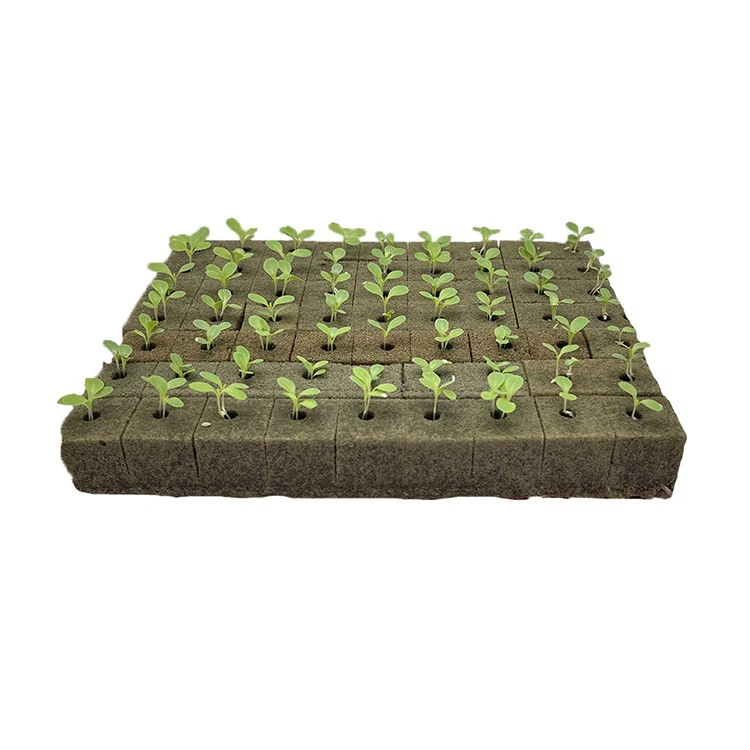
3. Increased Yield: With the efficient use of space, provision of a consistent environment, and reduction of water consumption, plant growing cubes have the potential to boost yield. The controlled environment provided by the plant growing cubes allows for the use of artificial light and regulated temperature, which can help boost plant growth.
4. Reduced Disease Spread: Plant growing cubes are sterile, which reduces the risk of plant disease and the spread of pathogens in a vertical farming system. It reduces the use of pesticides and herbicides to help protect against pests and plant diseases.
5. Efficient Use of Space: Vertical farming systems are designed to optimize space; plant growing cubes provide a compact and efficient way to utilize space. The cubes can fit into modular shelves with ease, making it possible to grow high quantities of plants per square meter.
6. Low Maintenance: Plant growing cubes are easy to use and require minimal maintenance. It is an excellent way to cut down on labor costs for vertical farming systems.
In conclusion, Tenlead plant growing cubes offer a range of benefits in vertical farming. It provides a consistent environment for plant growth, reduces the spread of disease, reduces water consumption, enhances yield, efficiently uses space, and is easy to maintain. These benefits can help make vertical farming more efficient, sustainable, and profitable.
Product Parameters
|
Material |
phenolic foam |
|
Density |
11-20kg/m³ 40-50kg/m³ |
|
Pore space |
90-98% |
|
PH value |
6.5-7.4 |
|
Electrical conductivity(ds/m, 20C degrees |
0.55 |
|
Shrinkage |
< 0.01% |
|
Compressive strength(kpa) |
20-31 |
|
Fully available water(%vol) |
50-61% |
|
Water retention time(h) |
72-144 |
|
Water retention capacity(%vol) |
50-91% |
Regular Size: 250x250x30mm per sheet (100 small cubes per sheet).
Company Overview


FAQ
Q: Do you have MOQ?
A: Depends on different ideas, Can be negotiated.The larger the quantity is, the competitive the unit price will be.
Q: What are the other items you supply?
A: We manufacture various foam items or relevant products, including plant blocks and rooting cuttage cubes. We’d love to send you a catalog if you require so.
Q: How is the package?
A: Normally are cartons, but also we can pack it according to your requirements.
Q: Is OEM or ODM service available?
A: Yes,we can provide OEM and ODM service.
Q: How to handle shipment?
A: You could assign a shipment company to pick up your good. Or we introduce some our local shipment companies to you. And then you talk with them about all transportation details.
If you have any interests, please feel free to contact us.
Hot Tags: Challenges Of Vertical Farming, Growing Cubes, Phenolic Foam Cubes, Grow Cubes for Starting Seeds, Plant Growing Cubes