


What is Vertical Farming?
Vertical farming is a method of agriculture that involves using vertically stacked layers or shelves to grow crops in a controlled environment. This practice is often used in densely populated urban areas where traditional farming is difficult or impossible due to a lack of space or arable land.
The concept of vertical farming has been around for decades, but recent advances in technology have made it more accessible and popular. In fact, the global vertical farming market is projected to reach $12.77 billion by 2026, according to a report by Allied Market Research.

The Advantages of Vertical Farming
The benefits of vertical farming are numerous. One of the most significant advantages is its ability to produce more food per unit of land than traditional farming methods. Vertical farming uses advanced lighting and water management systems, allowing crops to be grown year-round in a controlled environment, without the need for pesticides or herbicides. This means that crops can be grown in a more sustainable and eco-friendly manner, with less water usage and minimal waste.
Another key benefit of vertical farming is its ability to reduce transportation costs and carbon emissions. Since produce can be grown closer to urban areas, it does not need to be transported long distances, reducing the carbon footprint of the industry. Additionally, vertical farming allows for multiple harvests per year, making it possible to produce fresh, locally grown produce regardless of the season.
Vertical farming can also be used to promote food security in areas where traditional farming is not feasible. By growing crops in a controlled environment, vertical farms can produce a range of crops year-round, regardless of weather conditions or natural disasters. This has the potential to improve food access for communities facing food insecurity.
Despite its many benefits, vertical farming faces several challenges. The technology required for vertical farming can be expensive, making it inaccessible to some farmers. Additionally, energy costs associated with lighting and climate control can be high, which can make it difficult to achieve profitability.
Overall, vertical farming has the potential to revolutionize the way we grow and access food. By providing a more sustainable, efficient, and locally sourced option for produce, vertical farming is quickly becoming a popular solution to food insecurity, waste reduction, and environmental sustainability.
Tenlead Plant Growing Cubes
Vertical farming is an innovative method of agriculture that has gained popularity in recent years due to its ability to produce high yields of crops using minimal space and resources. One of the key components of successful vertical farming is the use of appropriate planting media.
Tenlead hydroponic planting cubes are very effective agricultural products, made of high-quality phenolic foam, melted at high temperature, compressed into blocks by a proprietary process. So the cubes are soft and uniform in texture, good water absorption, strong air permeability, and conducive to root growth. They are biodegradable and will completely degrade over time without polluting the environment. Conversely, some products that cannot be broken down, such as rock wool, will take you a lot of time and cost to handle. And when you soak the hydroponic growing cubes, the water will be lost quickly, so the cubes are not affected by microorganisms to a large extent. Excess water will still suffocate roots and hinder growth, and good ventilation can prevent this from happening.
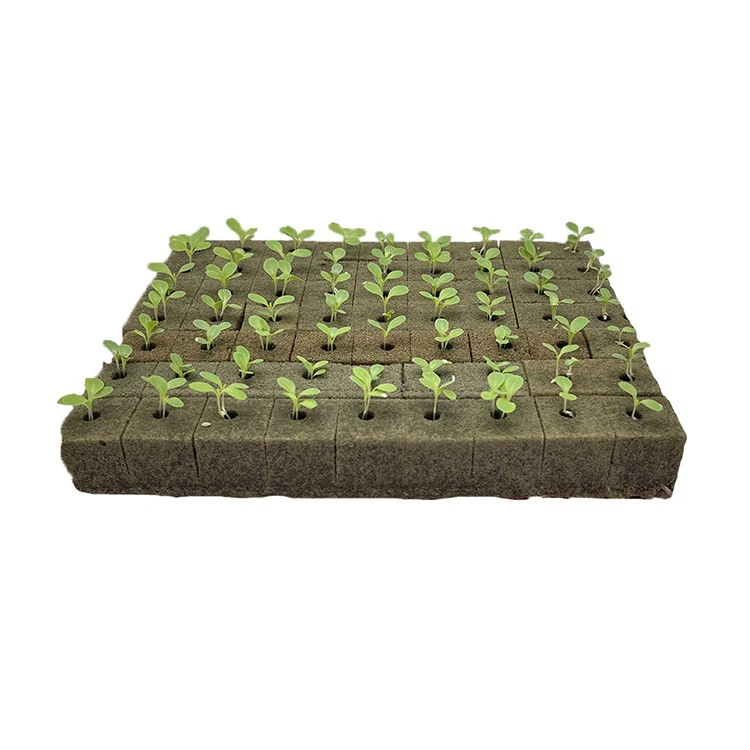
Regular Size: 250x250x30mm per sheet (100 small cubes per sheet).
Product Parameters
|
Material |
phenolic foam |
|
Density |
11-20kg/m³ 40-50kg/m³ |
|
Pore space |
90-98% |
|
PH value |
6.5-7.4 |
|
Electrical conductivity(ds/m, 20C degrees |
0.55 |
|
Shrinkage |
< 0.01% |
|
Compressive strength(kpa) |
20-31 |
|
Fully available water(%vol) |
50-61% |
|
Water retention time(h) |
72-144 |
|
Water retention capacity(%vol) |
50-91% |
Some Cases


FAQ
Q: Can I have a sample order for the product?
A: Yes, we welcome sample order to test and check quality. Mixed samples are acceptable.
Q: How about the after sale service?
A: 1) We will always keep the quality the same as the buyer's samples and if there is something with the quality,we will make compensation for our customers.
2)We will suggest our packing and take charge in our packing,we will keep the goods safe in the delivery.
3)We will trace the goods from the production to selling,we will solve the problems in the selling for our customers.
Q: Do you have any MOQ limit for the product?
A: No MOQ, 1 unit for sample quality inspection is acceptable.
Q: Can I Customize the label,size and packaging?
A: Yes,of course.
Any thoughts and questions will be appreciated!!!
Hot Tags: Vertical Farming At Home, Growing Cubes, Phenolic Foam Cubes, Seedlings Plant Media, Grow Cubes for Cuttings, Grow Cubes for Rooting


