Products Description
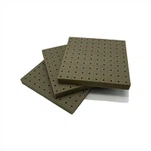
Growing plants is a fun and fulfilling activity that can provide numerous benefits to the environment and its inhabitants. However, not all plants thrive in soil-based environments, and some may require alternative growing methods, such as hydroponics. One popular hydroponic system utilizes planting cubes with holes like Tenlead planting cubes. Then we will introduce why planting cubes with holes can support small plants throughout their lifecycle.
Tenlead planting cubes are an essential component of hydroponic systems. These cubes are typically made from phenolic foam, which means they have no inherent nutrients of their own. The cubes have precisely positioned holes in which small plants can be grown. These holes facilitate water and nutrient distribution throughout the plant root system, providing a stable growing environment for the plants.

Increased Yield Potential
Plants grown in optimal conditions can often produce more significant yields. By utilizing planting cubes, plants can thrive in a controlled, nutrient-rich environment, leading to increased yield potential. Hydroponic systems can also reduce the time it takes for plants to mature, allowing for multiple growing cycles in a season.

Saving Water
Water is a valuable resource, and hydroponic systems are designed to reduce water consumption. Planting cubes are a perfect example of this, as they provide water directly to the plant roots, reducing water waste. The hydroponic system recirculates water, minimizing water loss and providing a more sustainable method of growing plants.
Planting cubes are an excellent component of hydroponic systems, providing numerous benefits for plants. They help create a controlled and consistent growing environment, reduce pests and diseases, increase yields, save water, improve nutrient absorption, and are more convenient. With these benefits, it is no wonder why planting cubes with holes can support small plants throughout their lifecycle.
Company Profile
1998
Xiamen Goot Advanced Material Co., Ltd. Batch mold foaming in 1998.
2001
The first continuous production assenbly line on stram in 2001(phenolic foam board composited with aluminum foil on both facing sides)
2006
Phenolic composited with steel duct panel on stream in 2006.
2009
Quantity production of phenolic wall insulation panel in 2009.
2011
Fujian Tenlead Advanced Co., Ltd.
Production base moved to Longyan city in 2011 (with newer equipment and bigger production capacity).
2014
Aquired ISO 9001 & 14001 certificates in 2014.
2018
More product series on stream and more applications.
Products parameters
| Material | Phenolic foam |
| Density | 11-20kg/m³ 40-50kg/m³ |
| Pore space | 90-98% |
| PH value | 6.5-7.4 |
| Electrical conductivity(ds/m, 20C degrees) | 0.55 |
| Shrinkage | < 0.01% |
| Compressive strength(kpa) | 20-31 |
| Fully available water(%vol) | 50-61% |
| Water retention time(h) | 72-144 |
| Water retention capacity(%vol) | 50-91% |
Product Picture


Our factory

workshop

workshop

workshop

workshop
Hot Tags: hydroponic planting cubes vs soil planting, manufacturers, suppliers, factory, for sale